Artificial Dyes, Additives, and Hyperactivity: The Evidence Parents Need to Know
If your child with ADHD has ever had a seemingly great morning that turned into a complete disaster by afternoon, and you couldn't figure out why, there's a possibility you haven't considered yet. It might have been in the juice box at lunch.
Synthetic food dyes have been linked to increased hyperactivity and worsened ADHD symptoms in peer-reviewed research for nearly two decades. Yet most parents have never been told this, because in North America, unlike Europe, there is no warning label required on the products that contain them. Your child could be consuming them every single day without you ever knowing they were a problem.
Picture a typical Tuesday for a lot of kids. Colored cereal for breakfast, a sports drink at lunch, fruit snacks after school and maybe a cupcake at a birthday party. By the end of that day your child may have consumed over 100 milligrams of petroleum-based synthetic dyes, in a completely normal day.
You might be wondering – is 100 milligrams a lot? The FDA's official safe daily limit for Red 40 is set at about 126 milligrams for a 40-pound child. That sounds like a comfortable buffer, until you realize that limit was set decades ago based on cancer research, not brain and behavior research, and it was never designed to protect a neurologically sensitive child.
It also tests each dye in isolation and not the combination of two or three dyes your child might be getting in a single bowl of cereal. California's Office of Environmental Health Hazard Assessment concluded that current safe intake levels may not actually be protecting children's behavioral health (Goldenring & Rose, 2022).
Research shows the most sensitive children can be affected by as little as 1 milligram of Yellow No. 5. For a child with ADHD, the official safe limit and the neurological impact threshold are not the same number.
What are these dyes and where are they hiding?
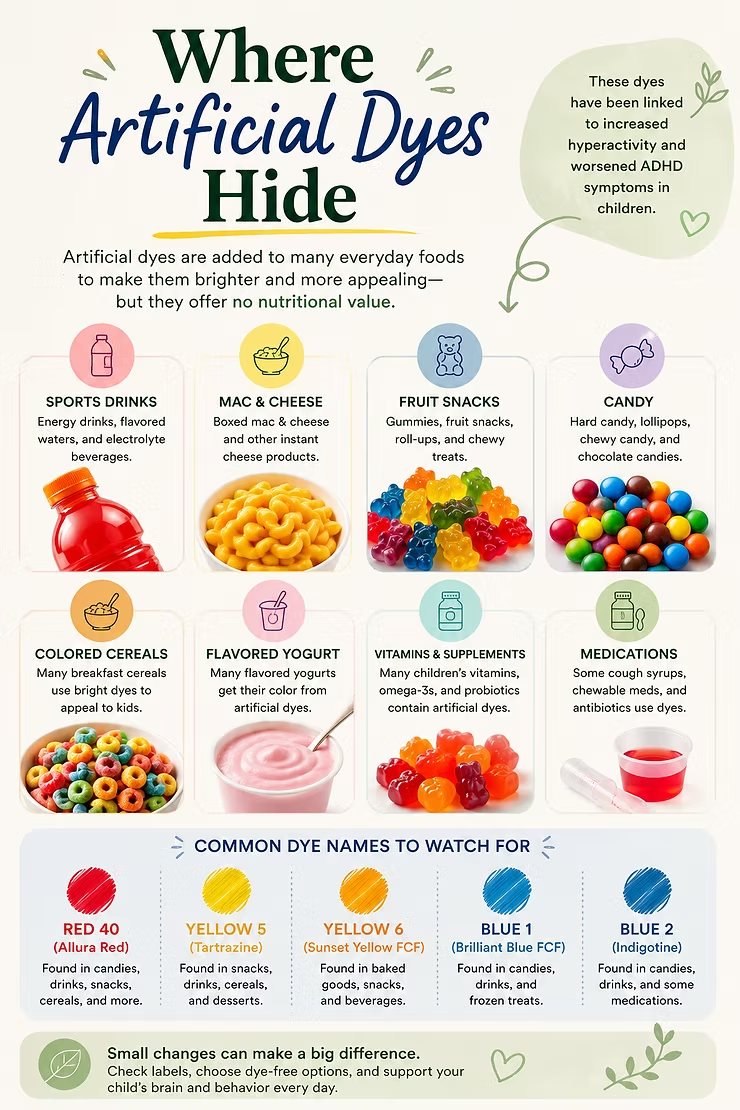
Synthetic food dyes are petroleum-based chemicals with zero nutritional value, added purely to make food look more appealing to children. The most common ones are Red 40, Yellow 5, Yellow 6, Blue 1, and Blue 2. They show up in the obvious places like candy, cereal, sports drinks, but also in flavored yogurts, mac and cheese, vitamins, and even some medications.
For an ADHD brain already struggling to filter distraction, these dyes create neurological noise that makes an already hard job even harder every single day.
What the research says
In 2007 researchers at the University of Southampton published a landmark randomized controlled trial in The Lancet, giving children either drinks containing artificial food colors and sodium benzoate, or an identical placebo. Children consuming the dye mixture showed significant increases in hyperactive behavior in the general population of children, not just those with ADHD (McCann et al., 2007).
A 2012 meta-analysis confirmed a reliable association between artificial food dyes and worsened ADHD symptoms specifically (Nigg et al., 2012). Children with ADHD appear significantly more sensitive to these effects than the general population (Arnold et al., 2012).
What governments have done, and what they haven't
The EU now requires warning labels on products containing these dyes stating they "may have an adverse effect on activity and attention in children." The FDA announced in April 2025 that it will phase out petroleum-based synthetic dyes from the American food supply by the end of 2027.
In Canada the situation is more complicated, and two misconceptions are worth clearing up. First, many Canadian parents believe dyes have already been removed from their food supply, partly because of examples like Froot Loops, which uses fruit-based dyes in Canada. That is a voluntary manufacturer choice, not a government ban.
Second, Canadian labels use different names. Red 40 is listed as Allura Red, Yellow 5 as Tartrazine, Yellow 6 as Sunset Yellow FCF, Blue 1 as Brilliant Blue FCF. They are the exact same compounds. A parent who has heard to avoid Red 40 might not recognize Allura Red on a label. All of these dyes remain legally permitted in Canada with no warning label required.
What you can do right now
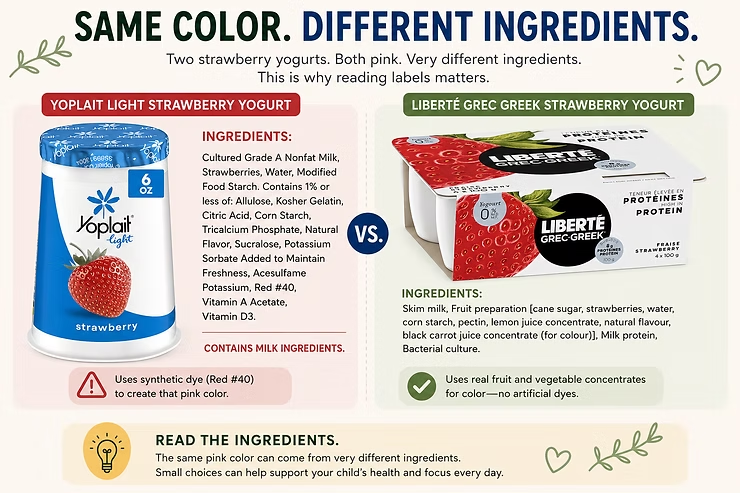
Check the ingredient list on the two or three products your child eats most frequently. Look for Red 40 or Allura Red, Yellow 5 or Tartrazine, Yellow 6 or Sunset Yellow FCF, Blue 1 or Brilliant Blue FCF. Find a dye-free swap for the one they eat most often. That single change can meaningfully reduce your child's daily dye load. For a brain that’s already working harder than average, removing a daily source of neurological interference is one of the most direct changes you can make.
Next up...
Post 4: What the research says about dietary intervention for ADHD families.

HEY, I'M MICHELLE.
I'm a former kindergarten teacher turned certified nutritionist and health educator, currently completing my Master's in Health Education and Behavior at the University of Florida.
After a decade in the classroom, I started noticing a pattern between what kids ate and how they showed up to learn, and I went back to school to understand why. I'm also a mom navigating this with my own child.
Fed to Focus is where I translate the research into something useful for your family.


JOIN MY MAILING LIST
©2026 Fed to Focus | Privacy Policy | Terms & Conditions